ALKARAMA
Palestinian Women's Movement
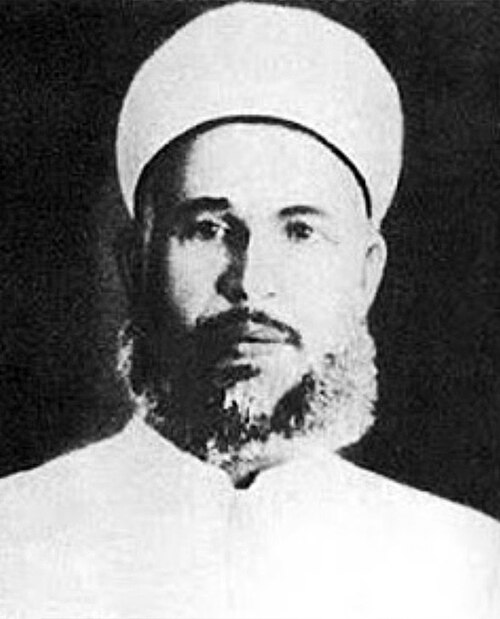
On 20 November 1935, Izzeddin al-Qassam and four of his comrades were killed in a confrontation with British Mandate police in Ya‘bad, near Jenin. Ninety-one years later, Alkarama revisits a lesser-known part of his political life: his work educating and organising alongside Palestinian women, peasants and workers.
Born in Jabla, in present-day Syria, and educated at Al-Azhar in Cairo, Al-Qassam settled in Haifa, where he worked as a teacher and preacher. From the 1920s onwards, he built his political work among peasants and the working classes. His class consciousness was evident in his decision to organise with people who were losing their land or finding themselves out of work in the cities, and in his recognition that they had a role of their own in the struggle over Palestine’s future.
His austere way of life and religious practice shaped his relationship with these communities. Much of the Palestinian leadership, closely tied to urban elites, sought agreements with the Mandate authorities. Al-Qassam advocated armed struggle against British rule. His work as an educator and organiser brought together faith, class consciousness and the pursuit of national liberation in the face of British rule and Zionist colonisation.
In Haifa, Al-Qassam provided political and religious education to women and founded an underground women’s organisation known as Refiqat al-Qassam (رفيقات القسّام). The group actively brought in women from villages at a time when much of Palestinian women’s organised political activity was based in cities. As Liyana Kayali records, the group also trained women in the use of arms. The available records tell us little about its members or the course of its activities.
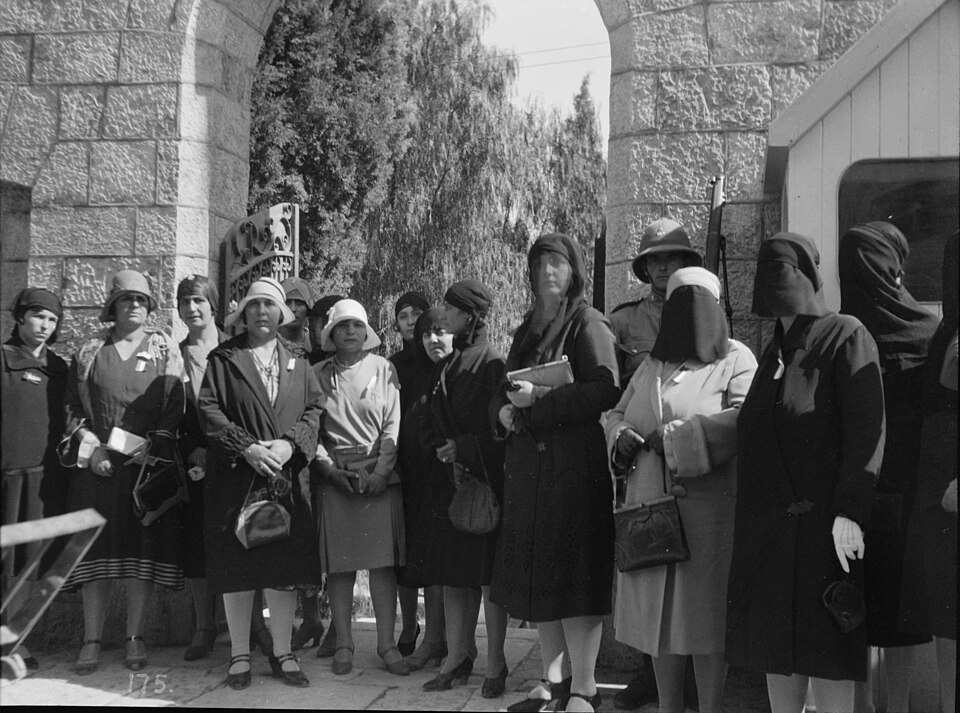
Palestinian women were already organising protests of their own and taking part in mobilisations against the Mandate. The experience of the Refiqat draws attention to rural women, whose political activity left fewer traces in the archives. Many worked the land, sold their produce and helped sustain their households. They had reasons of their own to organise against a colonial power that shaped daily life in their villages.
Al-Qassam’s death was one of the events that helped precipitate the Great Palestinian Revolt of 1936–1939. During the 1936 general strike and the revolt, women organised protests, raised funds, cared for the wounded and kept communities in contact. In villages where British repression was especially harsh, women kept households fed and rural economies going amid searches, arrests and collective punishment. Some took a direct part in the armed rebellion.
At Alkarama, we affirm the place of Refiqat al-Qassam and rural women in the history of the Palestinian anti-colonial struggle. Much of their work has been described as an extension of domestic duties. Yet communication between villages, care for the wounded and the livelihoods of entire communities depended on that work. Telling the story of the revolt from those villages restores women to their rightful place in a history they helped make.