ALKARAMA
Palestinian Women's Movement

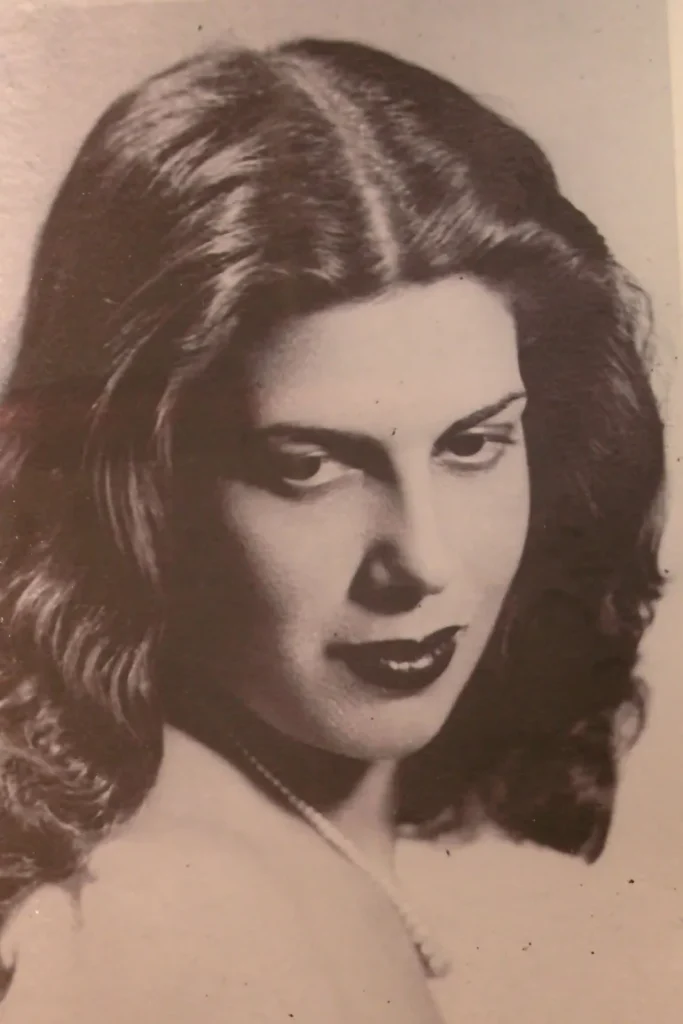
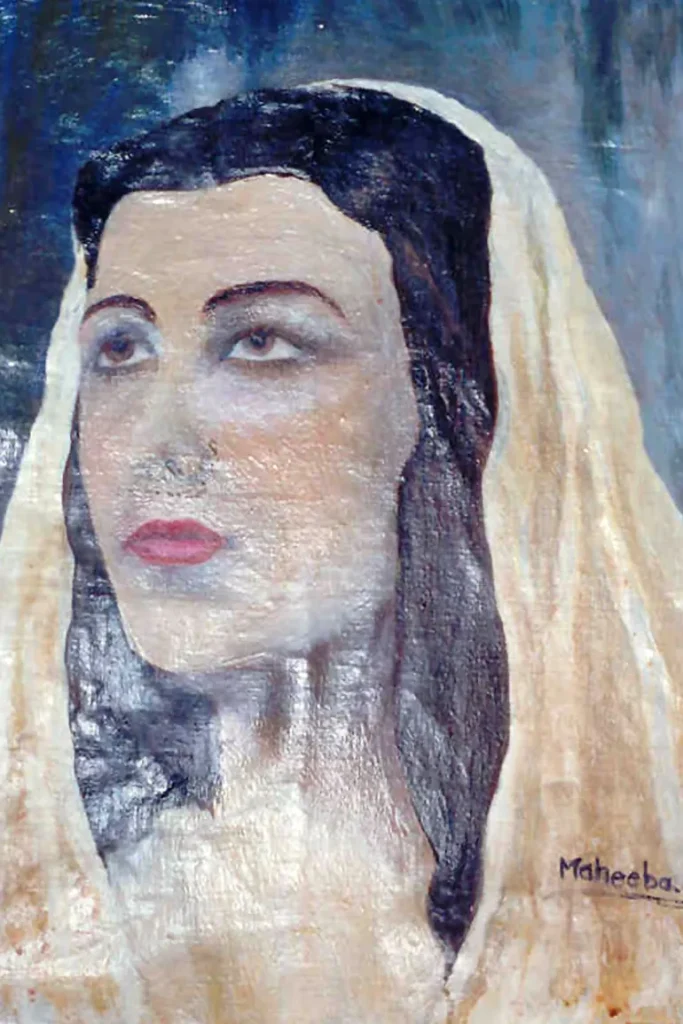
In the final years of the British Mandate, sisters Mahiba and Nariman Khorshid founded Zahrat al-Aqhawan, “The Chrysanthemum Flower,” in Yafa. Rooted in community work, the association became a pioneering organisation in Palestinian women’s armed resistance. Its members defended their city against attacks by Zionist militias and asserted their right to decide what role they would play in the struggle for Palestine’s liberation.
In March 1948, as Zionist militias attacked Yafa, Mahiba Khorshid wrote to Haj Amin al-Husseini to protest orders from several Palestinian commanders to halt Zahrat al-Aqhawan’s work. She put a direct question to them. How could they honour women at public ceremonies while preventing them from defending their own city?
The Khorshid sisters grew up in Yafa. Mahiba trained as a teacher in Jerusalem and returned to her city to teach at a girls’ secondary school. Nariman, known as “Arabiya,” worked as a secretary. Before founding Zahrat al-Aqhawan, both were active in Palestinian women’s associations, including the Arab Ladies Association. They organised educational activities for women and young people, helped students with limited means and cared for people who were ill or wounded.
Palestinian women had organised in the resistance before. In 1930s Haifa, a clandestine women’s group known as Rafiqat al-Qassam, “The Companions of al-Qassam,” emerged. Its founding is attributed to Izz al-Din al-Qassam. More than a decade later, sisters Mahiba and Nariman Khorshid founded Zahrat al-Aqhawan in Yafa, creating another organisation through which women could act on their own terms. Study on Palestinian popular resistance
The association took its name from a wildflower that blooms in Palestine in spring. It brought together women of different ages, backgrounds, social classes and faiths. Its early work included helping students and bringing people of different faiths together. Caring for the sick and wounded remained part of its work when the group joined the armed defence of Yafa.
Decades after the Nakba, the Khorshid sisters gave oral history interviews. Among the documents Mahiba shared was the secret oath young women took when they joined the organisation, dated 20 February 1947. Oral history and the text of the oath
“I swear on my honour, my religion and my creed to remain faithful to my principle and to give all that I hold dear and precious to do good and help anyone in need or vulnerable. I call the Lord of the worlds to witness what I have said. I will keep this secret until death.”
It was signed by Subhiya Awad, Khadija Kilani, Madiha al-Batta, Najma Akkasha, Maysar Daher, Saniya Irani, Fayza Shalun and Mabarra Khaled. The oath preserves their names and records the commitment they made to their community.
Nariman lived in al-Manshiyya, a neighbourhood in Yafa. From the window of her home, she saw a Zionist militia attack a bus carrying Palestinian passengers. On another occasion, returning from work, she found a residential building destroyed and addressed the neighbours gathered in front of the rubble. The next day, her employer fired her, accused her of incitement and withheld the wages she was owed.
Mahiba spoke regularly at demonstrations against British colonial rule and the expansion of the Zionist project. In her testimony, she recalled an episode that marked her transition from social and educational work to armed resistance. She saw a Palestinian child shot dead in front of his mother at the door of their home in Yafa. She also recalled that she then began corresponding with Palestinian commander Abd al-Qader al-Husseini. Mahiba Khorshid’s testimony
As attacks on Yafa intensified in 1947, the sisters decided to take a direct part in defending the city. Some commanders opposed women joining as fighters. The sisters brought together twelve young women and organised their participation. The Palestinian newspapers Ad-Difaa’ and Falastin covered Zahrat al-Aqhawan’s activities. In an interview published by the Egyptian newspaper Al-Masri on 7 April 1948, Nariman recalled that ten members of the organisation took part in defending an orphanage in Yafa when the Haganah attempted to attack it. One of the women was killed in the fighting.
In her March letter, Mahiba also spoke out against commanders who disregarded her companions’ sacrifices and undermined the trust the women had earned in their neighbourhoods. Her protest raises a question that still matters today. What place do women have when decisions are made in a struggle they themselves sustain?
Yafa fell on 13 May 1948. Like hundreds of thousands of Palestinians, the Khorshid sisters were expelled from their homeland during the Nakba. They went to Lebanon and then Jordan before settling in Egypt. Mahiba continued teaching. Nariman studied aviation and started a family. Among the objects her family kept were Zahrat al-Aqhawan’s binoculars and the trousers Nariman had worn during the defence of Yafa.
At Alkarama, we tell the story of women who organised on their own initiative in schools, in associations, in the streets and in the defence of their neighbourhoods. The dignity from which our movement takes its name is also present in Mahiba’s decision to speak up and demand that women have a say in a struggle they were already sustaining with their work and their lives.
This memory also belongs to young Palestinian women today, in our homeland and in the diaspora. Naming the women who made this history is part of our responsibility in telling it. We trust the next generations to carry it forward through their own experiences, in the struggle for return, self-determination and the liberation of Palestine.
Alkarama – Palestinian Women’s Movement.
Mahiba Khorshid’s biography · History of Zahrat al-Aqhawan in Yafa