ALKARAMA
Palestinian Women's Movement
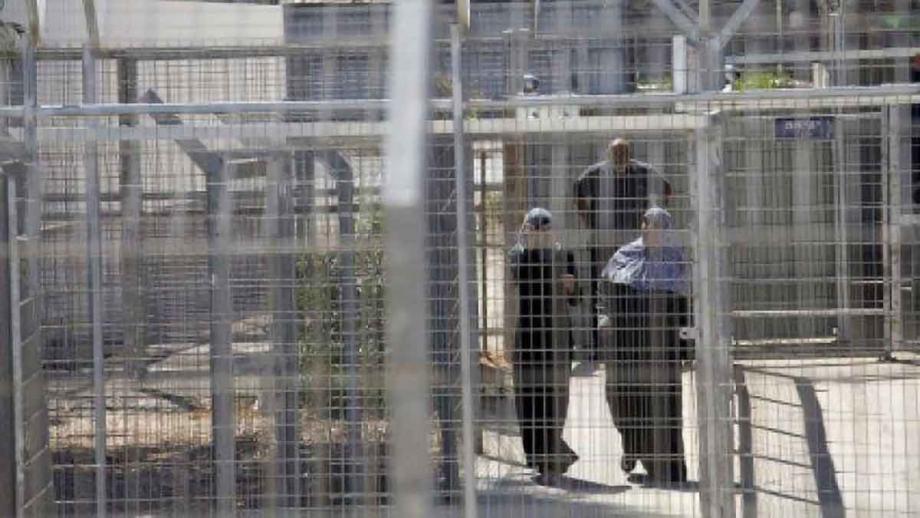
Rayan Qasem reflects on the reported assault of Palestinian women prisoners at Damon after they refused to be photographed without their hijabs, and defends their right to dignity, privacy and freedom of belief.
By Rayan Qasem
Even the hijab has been subjected to the jailer’s brutality. The prison walls are no longer enough to impose control. The jailer now interferes with what women prisoners wear, with their privacy and with their beliefs. At Damon, the attempt to subjugate Palestinian women plays out again and again, as though imprisonment alone were insufficient, as though the aim were to strip them of everything that ties them to their identity and dignity.
On Tuesday, 17 November 2026, another incident took place at Damon prison. According to the Prisoners’ Media Office, several women prisoners were beaten and intimidated after refusing to be photographed without their hijabs under the pretext of updating their records. Reports say the prison director forcibly removed one woman’s hijab, slapped her and pushed her towards the room where she was to be photographed. She had been released from eight days in solitary confinement earlier that same day.
I couldn’t finish reading the news. I stopped at the words “slapped her”. I’ve read those words so many times that they’ve become just another item in the news. That’s the problem. We’ve come to read about assaults on women prisoners the way we read the weather report. We glance at the story and get on with our day.
From a distance, what happened might seem to be an assault over what a woman was wearing. It was an attack on her dignity, her privacy and her right to hold on to her beliefs. It was an attempt to control a person down to the smallest details of her life. The jailer wants to decide what she wears and how she stands before him, turning her body into a site of confrontation.
What does the jailer expect from a woman who chose to face imprisonment and held on to her identity? What does he expect from a woman who came out of days in solitary confinement and said no again?
A woman in prison has a name, a family and memories. Her right to dignity endures behind bars. The hijab is part of her private life, and wearing it is a choice she has the right to make freely.
In our camp, we know what the hijab means. When so much has been taken from a woman, wearing it can remain one of the few decisions she still makes for herself. We see it in our homes, on the street and at school. We know that it is a choice, a way of preserving privacy and dignity. That’s why we understand why she held on to it even in solitary confinement.
The slap carried a message. The jailer sought to extend his power over the woman’s body and her choices. When a jailer lays hands on a prisoner’s hijab, what he fears is that she still has something he cannot take away.
Human rights organisations have documented harsh conditions, including solitary confinement, humiliating searches and assaults. Each time, we tell ourselves it will be the last. Then another incident reminds us that the story is far from over. A Palestinian woman retains her full humanity when she is imprisoned. Her rights belong to her. She holds them regardless of what the prison authorities decide.
The cause of women prisoners is inseparable from the cause of the Palestinian people as a whole. The occupation’s system of control extends from the land to daily life, education and privacy. Palestinian women stand at the heart of this struggle, asserting their rights and taking a stand.
I have never seen Damon prison, but I know what it means to live somewhere every detail of your life is monitored and you have no way to answer back. Anger alone cannot protect a woman behind bars.
We need sustained action to defend prisoners’ rights. The Red Cross must be granted access, an independent investigation must be carried out, and those responsible must be held to account. Organisations must keep the plight of women prisoners in view throughout the year.
Palestine is more than the checkpoints and prisons to which it is reduced. Palestinian women have the right to decide what happens to their own bodies. Anyone who thinks tearing off a hijab can break a woman’s will confuses the power to inflict harm with the power to subjugate her.
I write this because the silence has become unbearable.
Originally published in Arabic by the Palestinian Information Center. Read the original article
